




January 15, 2026
Risk Overview
In commercial soybean production systems, the crop’s early growth characteristics and canopy development patterns make it particularly sensitive to weed competition during establishment. Soybean typically exhibits limited early-season competitiveness, which increases exposure to resource competition for light, water, and nutrients when weed pressure is present.
As a result, weeds represent one of the most consistent sources of yield variability and management complexity in soybean production. Weed competition during early growth stages can significantly influence crop establishment, nutrient and water use efficiency, and overall stand uniformity.
From a management perspective, weed pressure is not defined solely by visible infestation levels within a single season. Instead, it reflects cumulative effects driven by weed seedbank dynamics, cropping system design, and historical management practices. As production systems intensify and resistance risks increase, structured and forward-looking weed management becomes essential for maintaining predictable soybean performance.
Weed Characteristics in Soybean Systems
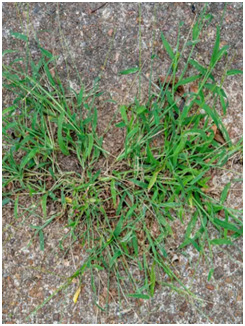
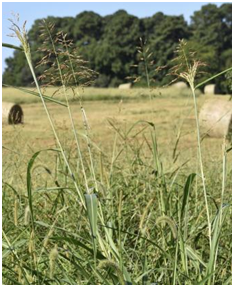
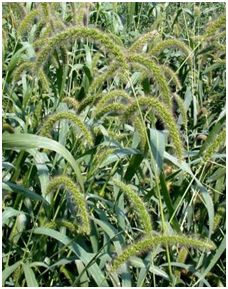
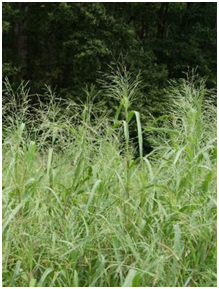
Grassy weeds commonly encountered in soybean systems are characterized by rapid early growth and strong competition for light and nutrients during early crop establishment. Species such as Echinochloa spp. often emerge in synchrony with planting operations, allowing them to exploit early-season resource availability and establish competitive advantage.
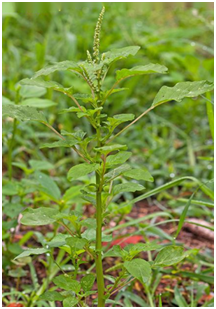
Broadleaf weeds, including species such as Amaranthus spp., present different management challenges. Their growth patterns, adaptability to production systems, and capacity for prolific seed production can contribute to persistent seedbank pressure and long-term population shifts if not addressed at the system level.
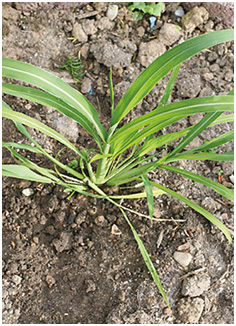
In addition, sedges such as Cyperus spp. may further complicate weed communities in certain environments, reinforcing the need for integrated, population-focused management strategies.
Impact on Commercial Soybean Production
Early-season competition can reduce plant vigor and create uneven stands, affecting harvest consistency.
Weeds divert water and nutrients away from the crop, reducing the effectiveness of fertilization and irrigation programs.
Increasing weed pressure and resistance concerns can raise the complexity and cost of control programs over time.
Persistent weed seedbanks and resistance development may constrain future crop planning and rotational flexibility.
For large-scale operations, these impacts translate into reduced predictability and elevated operational risk.
Linking Weed Management to Profitability
In soybean production systems, weed management decisions have direct implications for overall production profitability. Effective weed management supports more uniform crop establishment and reduces early-season competition, which contributes to more predictable yield outcomes and improved input efficiency. When weed pressure is managed proactively, resources such as fertilizers, water, and crop protection inputs are more effectively utilized by the crop rather than diverted to competing vegetation.
From a commercial perspective, consistent weed management also helps stabilize production costs across seasons. Fields with well-managed weed populations typically require fewer corrective interventions and allow greater flexibility in crop planning and rotation. In contrast, escalating weed pressure and resistance development can increase operational complexity, limit available management options, and introduce additional cost uncertainty over time. As a result, integrated weed management should be viewed not only as an agronomic necessity, but as a strategic component of long-term profitability and risk management in soybean production.
Integrated Weed Management Approach (IPM)
Sustainable weed management in soybean production is best achieved through an integrated management framework that aligns multiple decision-making dimensions rather than relying on single interventions. Integrated weed management emphasizes long-term population suppression, system resilience, and risk reduction across cropping cycles.
Crop sequence, rotation diversity, and system structure influence weed population dynamics and competitive balance.
Management decisions related to field hygiene and equipment movement can affect the introduction and spread of weed species across fields.
Early crop vigor and canopy closure play an important role in limiting weed establishment and growth potential.
Where applicable, different control tools are evaluated for their complementary roles rather than as stand-alone solutions.
Together, these considerations support more resilient soybean production systems under ongoing weed pressure.
Chemical Control Considerations
Chemical weed control tools may be considered as one component within an integrated weed management program when aligned with overall system objectives. Their role is typically evaluated based on weed spectrum, resistance risk, and compatibility with other management strategies rather than short-term corrective outcomes.
Products such as King’s Proud, King’s Glu, King’s Winner, King’s Seal, King’s Glory, and King’s Fortify may be integrated within a broader weed management framework where appropriate. Chemical interventions are positioned to complement system-level strategies and support consistent crop establishment when selected in accordance with integrated management principles.
King Quenson Support Statement
King Quenson is well positioned to support importers and professional agricultural operations in evaluating soybean weed management strategies and integrating compliant, system-oriented solutions based on specific production conditions and management objectives.
Disclaimer
This article is based on publicly available agricultural extension materials and general integrated pest management practices. Management considerations should be adapted to local conditions, cropping systems, and regulatory requirements.