Risk Overview
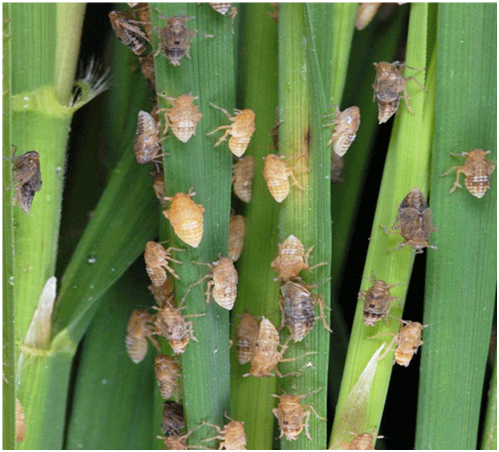
Brown planthopper (Nilaparvata lugens) is among the most significant insect pests affecting rice production across many Asian rice-growing regions. Under favorable environmental conditions, populations can increase rapidly and create substantial pressure on crop productivity, yield stability, and production profitability.
For commercial rice operations, brown planthopper management is best viewed as a long-term risk management issue rather than a single-season pest control challenge.
Pest Characteristics
Brown planthoppers feed on rice plants by extracting sap from plant tissues, reducing plant vigor and potentially causing severe crop stress under heavy infestations. Large populations may result in extensive plant decline commonly referred to as hopper burn. It can also transmit Rice Ragged Stunt Disease and Rice Grassy Stunt Disease, potentially increasing production risks through reduced crop uniformity, lower yield stability, and compromised harvest quality.
Impact on Commercial Production
Brown planthopper outbreaks can affect both yield quantity and crop uniformity. Economic impacts are often amplified when infestations develop unnoticed during key growth stages.
Several factors may contribute to elevated risk, including: Warm and humid environmental conditions, continuous or overlapping rice production cycles, imbalanced crop nutrition programs, reduced populations of beneficial insects and repeated reliance on similar pest control tools
As a result, effective management requires a system-wide approach that combines monitoring, prevention, and intervention strategies.
Integrated Pest Management Approach (IPM)
Integrated Pest Management (IPM) remains the most sustainable framework for managing brown planthopper populations.
Key components may include:
Crop and Field Management: Agronomic practices that promote healthy crop development and reduce favorable conditions for pest population growth can contribute to long-term risk reduction. Maintaining field sanitation and minimizing alternative host habitats may further contribute to risk reduction. Balanced crop nutrition programs are also important, as excessive nitrogen inputs can favor brown planthopper population development.
Monitoring and Risk Assessment: Regular field scouting and population monitoring support timely management decisions and help identify developing infestations before significant economic damage occurs.
Conservation of Beneficial Organisms: Natural enemies can play an important role in suppressing brown planthopper populations. Preserving beneficial arthropods should be considered when developing pest management programs.
Resistance Management: Insecticide resistance has been reported in brown planthopper populations in multiple rice-producing regions. Consequently, resistance management should be incorporated into all long-term control programs through diversified management strategies and appropriate mode-of-action rotation.
Chemical Control Considerations: Chemical control may be incorporated into an IPM program when justified by local pest pressure, economic considerations, and monitoring results. When evaluating insecticide options, growers and importers should consider: local resistance status, compatibility with existing IPM programs, regulatory requirements and potential impact on beneficial organisms. Certain insecticide technologies, such as King’s Spike, may be considered within an IPM program, subject to local registration status, approved product labeling, and applicable regulatory requirements. Chemical interventions are most effective when integrated with broader pest management strategies rather than used as standalone solutions.
Importer and Large–Scale Grower Perspective
For agricultural importers and large-scale rice producers, successful brown planthopper management depends on balancing efficacy, resistance stewardship, regulatory compliance, and long-term sustainability.
Integrated programs that combine monitoring, cultural practices, biological considerations, and carefully selected crop protection tools are generally better positioned to support stable production outcomes and sustainable pest management objectives.
King Quenson Support Statement
King Quenson supports commercial growers and importers through locally adapted IPM programs developed in accordance with regional production practices and regulatory requirements.
Disclaimer
This article is based on publicly available agricultural extension materials and general integrated plant protection practices. Management recommendations should be adapted to local conditions and regulations.