Soybean
Soybean (Glycine max) is a strategically important legume crop with global significance in food, feed, and industrial value chains, with yield formation and grain quality strongly influenced by soil structure, root-zone biological activity, and nutrient balance. Effective soybean production depends on well-aerated soils, balanced phosphorus and potassium availability, adequate sulfur and micronutrient supply, and healthy rhizosphere interactions, which collectively determine root nodulation efficiency, nitrogen fixation capacity, pod set, seed filling, and final protein and oil content.
Despite its adaptive capacity, soybean production faces increasing physiological and environmental constraints. Soil compaction and poor drainage limit root development and nodulation, while nutrient imbalance (notably deficiencies in potassium, sulfur, boron, and molybdenum) disrupts nitrogen fixation and reproductive development, leading to flower and pod abortion, reduced seed size, and yield instability. In addition, climate variability — including heat stress, drought episodes, and excessive rainfall during critical growth stages — further compromises stand uniformity and harvest performance, increasing production risk.
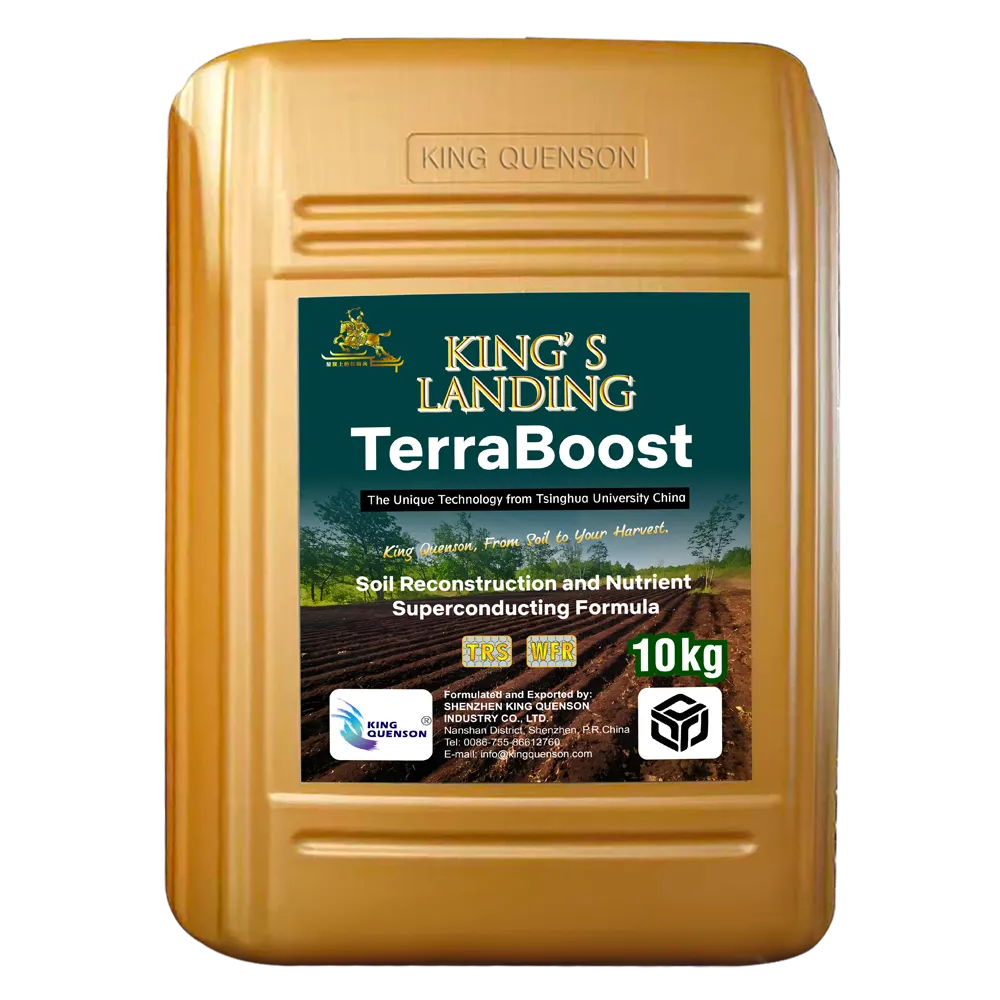
By integrating precision nutrition strategies and root-zone optimization, growers can enhance rhizosphere function, improve nutrient use efficiency, and stabilize nitrogen fixation under variable conditions. In this context, King’s Landing solutions such as TerraBoost, RootRevive, and NutriFe support soil structure improvement, root system vitality, and balanced nutrient uptake, enabling soybean crops to achieve more consistent yields, improved seed quality, and enhanced resilience across seasons.
Related News
July 1, 2026
June 30, 2026