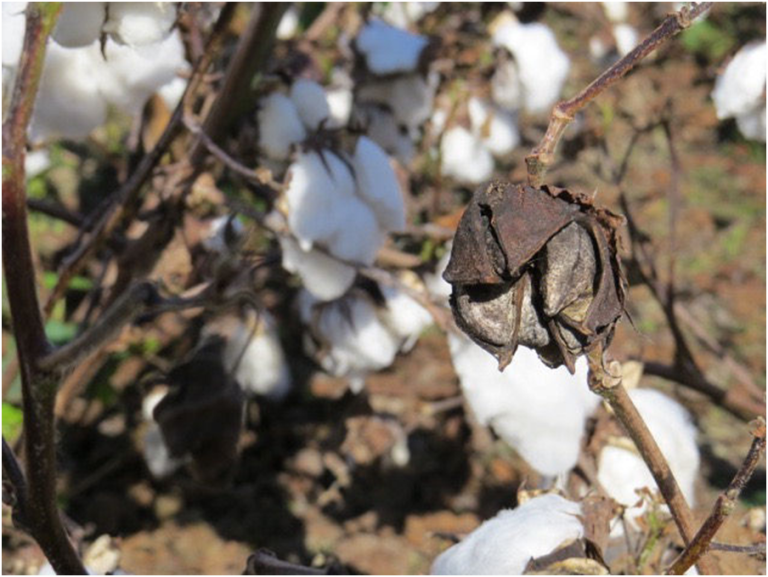
Risk Overview
In commercial grain handling and storage systems, stored-product insect pests remain a critical risk factor influencing post-harvest losses and supply chain stability. Unlike field pests, infestations often develop within enclosed environments, where detection may be delayed and population growth can occur unnoticed.
From a management perspective, stored pest pressure is not limited to direct commodity loss. Infestations can compromise grain quality, trigger secondary issues such as contamination and spoilage, and create downstream challenges related to food safety standards and contractual obligations. As storage durations extend and logistics become more complex, effective pest risk management becomes an essential component of post-harvest system design.
Stored Pest Characteristics
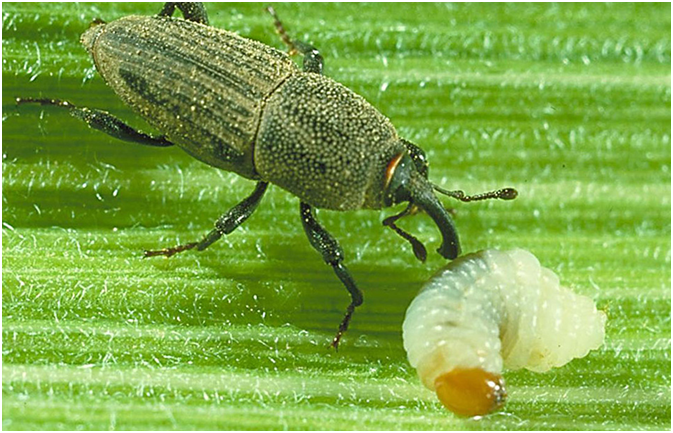
Stored-product insects share several characteristics that complicate management in commercial grain storage environments. Common examples encountered across global grain handling systems include Sitophilus spp. (weevils), Rhyzopertha dominica (lesser grain borer), Tribolium spp. (flour beetles), and Plodia interpunctella (Indian meal moth).
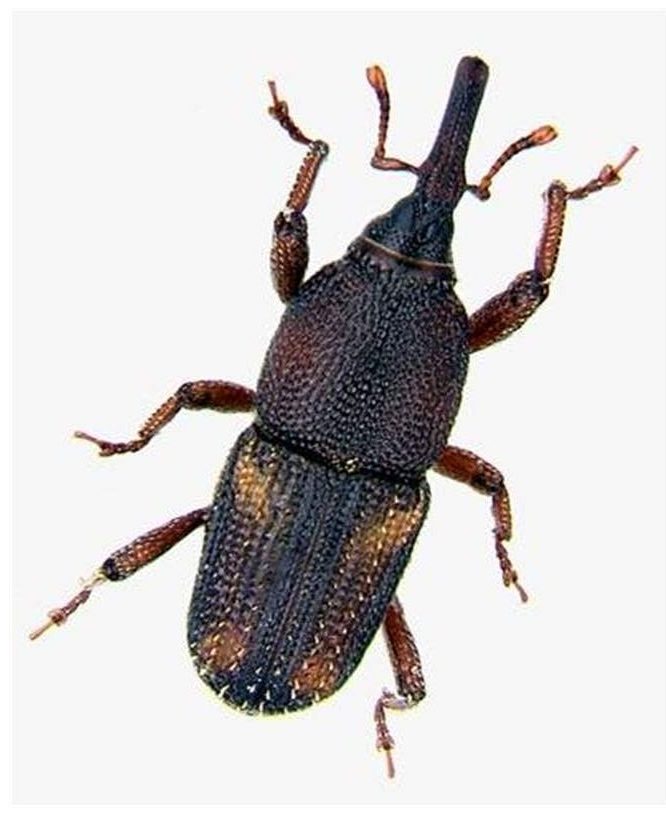
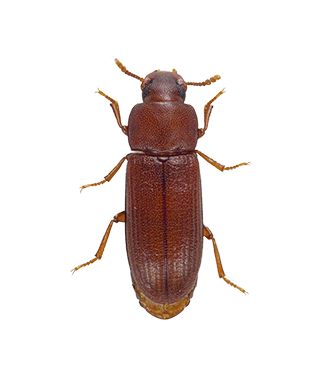

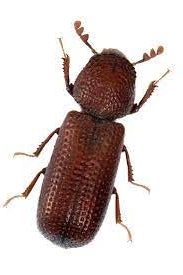
These pests are capable of completing their life cycles within stored commodities or structural spaces, allowing infestations to develop with limited early visibility. Their population dynamics are strongly influenced by storage conditions such as temperature, moisture, and grain quality, enabling rapid expansion once favorable conditions are established. In addition, residual populations may persist across storage cycles if system-level controls are insufficient, leading to repeated re-infestation risks. Because many stored-product insects can infest multiple grain types, infestations are rarely confined to a single batch, increasing the potential for cross-contamination within facilities and across supply chains.
From a management perspective, these shared characteristics mean that stored pest challenges are best addressed through system-oriented risk management rather than species-specific control measures.
Impact on Commercial Grain Handling and Trade
The presence of stored pests in grain systems affects commercial operations beyond immediate physical losses. Infestations may lead to:
- Weight loss and quality degradation
Feeding damage reduces marketable yield and alters grain characteristics.
- Increased risk of contamination
Insect fragments and metabolic by-products can compromise hygiene standards.
- Reduced storage flexibility
Infested facilities may require downtime or segregation measures.
- Trade and compliance challenges
Pest presence can affect inspection outcomes, contract fulfillment, and customer confidence.
For importers and large-scale operators, these impacts translate into elevated operational risk and reduced predictability across supply chains.
Integrated Management Approach (IPM)
Effective stored pest management is best achieved through an integrated pest management framework that emphasizes prevention, monitoring, and risk-based intervention. Rather than relying on single corrective actions, IPM programs typically address multiple management dimensions simultaneously.
- Storage system design and structural integrity
Facility condition influences pest access, harboring potential, and control effectiveness.
- Inventory flow and batch management
Storage duration and turnover patterns affect pest population dynamics.
- Monitoring and decision thresholds
Risk assessment is guided by surveillance data rather than reactive response.
- Coordination of complementary control measures
Physical, managerial, and chemical tools are evaluated as parts of a unified system.
Together, these considerations shift stored pest management from reactive treatment toward structured risk control across storage cycles.
Chemical Control Considerations
Within integrated stored pest management programs, chemical control tools may be considered under specific risk scenarios where preventive measures alone are insufficient. Their role is typically evaluated based on pest pressure, storage conditions, and compatibility with overall management objectives.
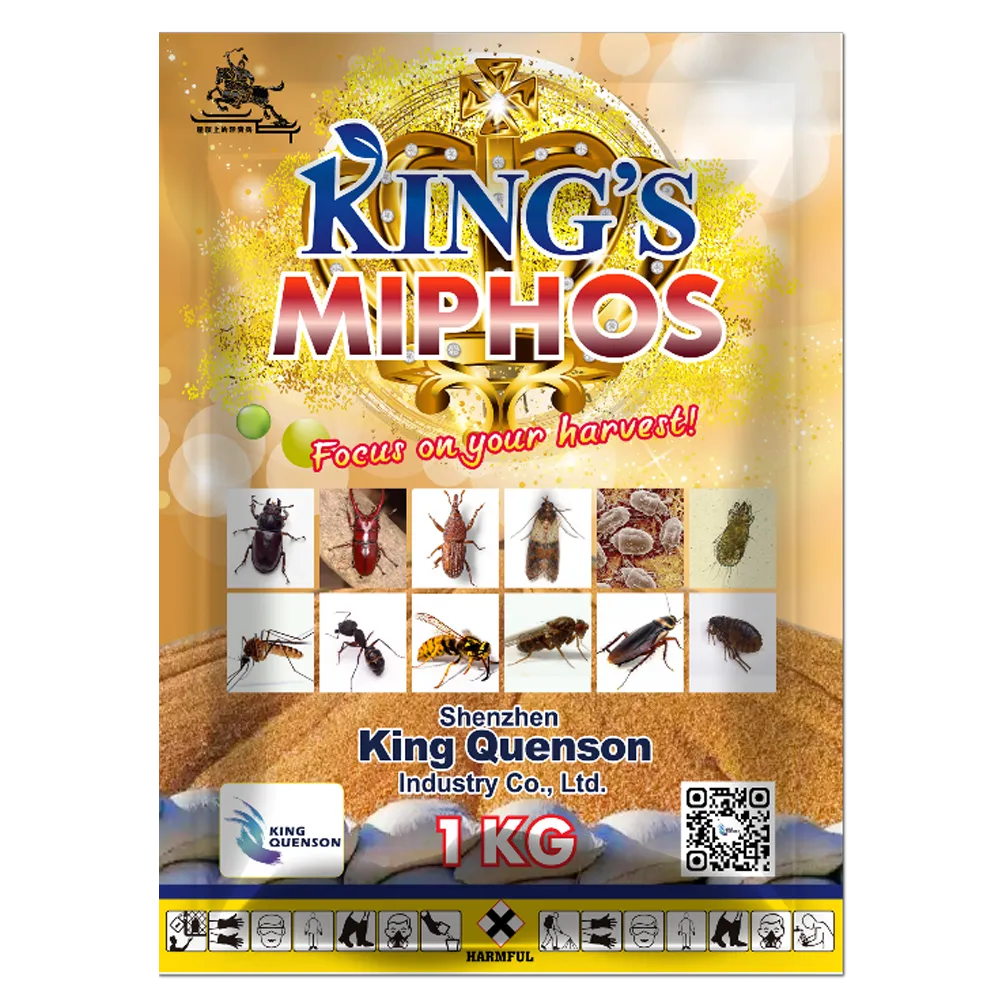
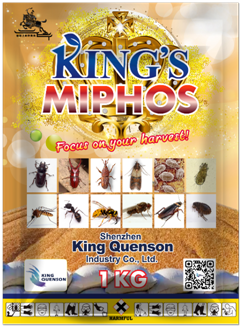
Products such as King’s Fist, King’s Miphos, and King’s MalathioPro may be integrated as part of a broader IPM strategy, where appropriate. Chemical interventions are positioned to complement structural and managerial measures, with selection informed by target pest profiles, resistance management principles, and post-harvest compliance considerations.

King Quenson Support Statement
King Quenson is well positioned to support importers and professional grain handling operations in evaluating stored pest management strategies and integrating compliant, system-oriented solutions based on specific storage conditions and operational requirements.
Disclaimer
This article is based on publicly available agricultural extension materials and general integrated pest management practices. Management considerations should be adapted to local conditions, storage systems, and regulatory requirements.