
Overview
The green peach aphid, Myzus persicae, is one of the most economically damaging aphid pests in commercial agriculture. Its extreme polyphagy-colonising over 400 plant species-makes it a persistent threat to high-value crops such as potatoes, peppers, brassicas, stone fruits and tobacco. Beyond direct feeding damage, it efficiently vectors more than 100 plant viruses, often causing greater losses than feeding itself. The pest’s global success is driven by short generation time, high fecundity, parthenogenetic reproduction and an exceptional capacity to evolve resistance-with documented resistance to over 80 active ingredients, placing it among the top ten most resistant arthropod pests worldwide. Adopting a robust Integrated Pest Management (IPM) framework is therefore essential for sustainable production.
Pest Profile
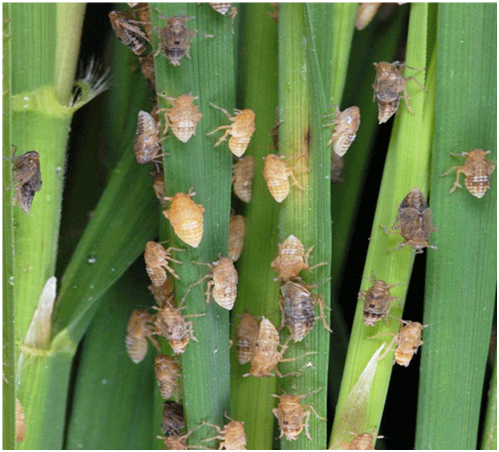
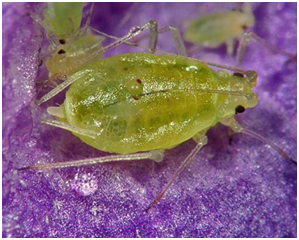
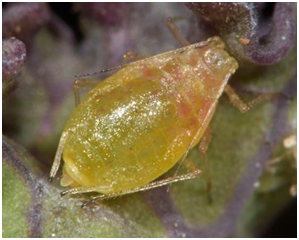
Myzus persicae exhibits pronounced morphological plasticity. Wingless adults are typically pale yellow to green, 1.5-2.0 mm in length, while winged migrants possess a dark head and thorax and a yellowish-green abdomen with dark dorsal markings. The life cycle is variable: in temperate regions, the aphid alternates between Prunus spp. (primary hosts, where overwintering eggs are laid) and a wide range of herbaceous secondary hosts. In warmer climates and protected environments, continuous parthenogenetic reproduction occurs, enabling year-round population pressure. This reproductive flexibility, combined with rapid nymphal development, allows populations to reach damaging levels within a short period under favourable conditions.
Development Conditions/Risk Factors
Populations develop most rapidly at temperatures between 20°C and 25°C. Several risk factors favour outbreaks: mild winters that increase survival of overwintering stages, dry spring weather, excessive nitrogen fertilisation that produces succulent young growth, and proximity to virus-reservoir weeds or previous season’s crop residues. In virus-prone cropping systems, even low aphid densities during early crop growth stages can initiate epidemic virus spread, making early risk assessment a critical management step. Additionally, the global distribution of resistant populations means that any chemical intervention must be carefully selected and rotated.
Impact on Commercial Production
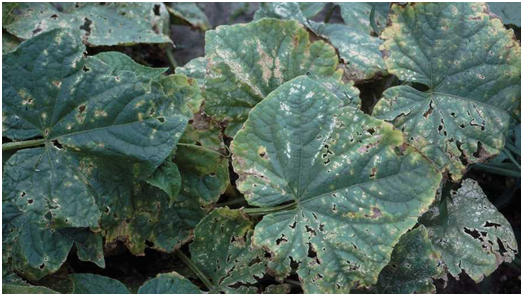
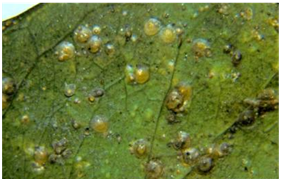
Direct damage includes chlorosis, leaf curling, stunted shoot growth and reduced fruit quality. The honeydew excreted by aphids promotes sooty mould growth, which impairs photosynthesis and reduces the marketability of fresh produce. Indirect damage-virus transmission-is often more severe. In potatoes, M. persicae transmits Potato leafroll virus (PLRV) and Potato virus Y (PVY), which can reduce tuber yield by 20-70% and compromise seed quality. In oilseed rape, turnip yellows virus (TuYV) transmitted by this aphid can cause up to 26% yield loss. For large-scale operations, such impacts translate directly into commercial risk and supply chain instability.
Prevention and Management (IPM Framework)
Effective management of M. persicae in commercial systems relies on a multi-tiered IPM approach that reduces reliance on any single tactic and mitigates resistance development.
Cultural practices: Field sanitation-removal of overwintering host plants and crop residues-reduces initial inoculum. Crop rotation with non-host species and avoidance of planting near known virus-reservoir weeds help delay colonization. Balanced nitrogen fertility (avoiding excess) limits succulent growth that favours aphid reproduction. Where applicable, reflective mulches can repel alate colonisers during early crop establishment.
Biological control: A diverse community of natural enemies-including ladybeetles (Harmonia axyridis, Coccinella septempunctata), lacewings (Chrysoperla spp.), hoverfly larvae (Syrphidae), and parasitic wasps (Aphidius spp., Aphelinus spp.)-can effectively suppress M. persicae populations when conserved. Conservation biocontrol is enhanced by establishing flowering cover crops (e.g., sweet alyssum, buckwheat, or leguminous plants) in field margins or inter-rows, providing nectar and pollen to adult parasitoids and predators. Avoiding early-season broad-spectrum insecticides is critical to preserve these natural enemies.
Monitoring and decision support: Yellow sticky traps placed at canopy height are useful for detecting alate migration. In-field scouting should focus on young leaves, shoot tips, and lower leaf surfaces. Action thresholds are determined locally based on crop type, virus pressure, and economic considerations; in virus-prone systems, intervention may be considered at very low densities. Specific monitoring frequency and thresholds should follow regional extension recommendations.
Management Options / Supportive Solutions
When chemical control is required, selecting active ingredients with novel modes of action is essential due to widespread resistance. King’s Gauntlet may be considered as part of a chemical control program, subject to local registration status, approved product labels, and regulatory requirements. Rotation of modes of action across seasons and avoiding repeated use of the same chemical class are strongly advised as core resistance management practices.
Importer / Large-scale Grower Perspective
For importers and large-scale production systems, long-term profitability depends on moving from reactive treatments to planned, documented IPM programs. This includes sourcing products with novel modes of action that are effective against resistant populations, investing in biocontrol infrastructure (such as banker plant systems or conservation strips), implementing regional resistance monitoring, and training field teams in early detection and threshold-based decision making. Furthermore, understanding local registration status and ensuring compliance with import regulations for any chemical residue are essential steps for maintaining market access.
King Quenson Support Statement
King Quenson is well positioned to support importers and large-scale agricultural operations in developing tailored, compliant IPM strategies based on local conditions and regulatory requirements.
Disclaimer
This article is based on publicly available agricultural extension materials and general integrated plant protection practices. Management recommendations should be adapted to local conditions and regulations. The mention of King’s Gauntlet is for informational purposes only and does not constitute an endorsement or guarantee of efficacy. Always consult locally approved product labels and regulatory authorities before any pesticide use.