Risk Overview
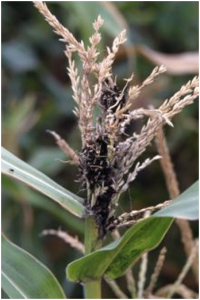
Within commercial corn production systems, head smut-caused by Sphacelotheca reiliana [syn. Sporisorium reilianum]-represents a systemic disease risk with direct implications for yield predictability and marketable output.
Unlike common smut, which typically causes localized damage, head smut results in complete loss of reproductive structures on infected plants, leading to zero grain production at the individual plant level.
For importers and large-scale agricultural operations, the primary concern lies not only in incidence levels, which are often variable, but in the disease’s unpredictability and its ability to persist in soil over multiple production cycles. The delayed expression of symptoms further limits early-season risk visibility, complicating production planning and field-level decision-making.
Head Smut Profile in Corn Production Systems
Head smut is a soilborne fungal disease that infects corn at the seedling stage and develops systemically within the plant.
Key characteristics relevant to commercial production include:
- Early infection window: Infection occurs shortly after germination, while symptoms remain undetectable until reproductive stages
- Soil persistence: Teliospores can survive in soil for multiple seasons, contributing to long-term field-level risk
- Multiple transmission pathways: Movement of contaminated soil, equipment, and airborne spores may contribute to pathogen spread between fields
These characteristics make head smut a structural production risk rather than a seasonal issue.
Development Conditions and Risk Factors
Disease pressure is influenced by a combination of environmental and agronomic factors that affect early crop establishment and soil pathogen dynamics.
Conditions commonly associated with elevated risk include:
- Soil environments that favor pathogen survival during the seedling stage
- Cropping systems with limited rotation diversity
- Production conditions that extend the vulnerability window during early plant development
- Accumulation of inoculum in fields with a history of infection
At the system level, risk is closely linked to long-term cropping strategies and soil management practices rather than in-season interventions.
Impact on Commercial Corn Production
The impact of head smut in commercial production systems extends beyond direct yield loss.
Key implications include:
- Loss of productive plants: Infected plants do not contribute to yield
- Variability in field performance: Even moderate incidence levels may affect overall yield stability
- Harvest and quality considerations: The presence of spore material may influence grain handling and grading outcomes
- Long-term field risk: Persistent soil inoculum can affect future production cycles
For importers and vertically integrated operations, these factors may influence supply reliability, contract fulfillment, and consistency of marketable product.
Integrated Management Approach (IPM)
Effective management of head smut requires a multi-season, system-based IPM strategy focused on reducing exposure during the early infection window and managing long-term soil risk.
Key components include:
Cropping System Considerations
Diversification of crop rotation systems may contribute to reducing long-term inoculum pressure, although pathogen persistence in soil requires a multi-season perspective.
Agronomic and Cultural Factors
Hybrid selection, crop establishment dynamics, and overall soil fertility management may influence the level of disease expression within production systems.
Operational Hygiene
Movement of soil and plant material between fields represents a potential pathway for pathogen spread. Operational practices that reduce cross-field contamination risk are an important component of system-level management.
Monitoring and Risk Assessment
Field-level observation at later growth stages supports evaluation of disease presence and informs future management planning, particularly in fields with known history.
Chemical Control Considerations
Due to the systemic nature of infection and its occurrence during early plant development, curative chemical control options are not available once the disease is established.
Within an IPM framework, chemical tools may be considered as part of preventive strategies aimed at reducing infection risk during the early crop establishment phase.
In markets where they are registered and approved, fungicide-based solutions such as King’s Doctor may be evaluated as components within pre-planting disease management programs.
In addition, for operations implementing broader crop protection programs, products such as King’s Care may be integrated within overall disease management strategies, depending on local disease spectra and agronomic conditions.
All product use must be subject to local registration status, and applied in accordance with approved product labels and regulatory requirements.
Production System Perspective
From a commercial perspective, head smut management is best understood as a long-term risk management challenge rather than a single-season issue.
Decisions related to cropping systems, hybrid selection, and preventive protection strategies contribute cumulatively to reducing variability and supporting stable production outcomes.
For importers and large-scale producers, integrating disease risk considerations into procurement planning and production system design enhances predictability across supply chains.
King Quenson Support Statement
King Quenson is well positioned to support importers and large-scale agricultural operations in developing tailored, compliant IPM strategies based on local conditions and regulatory requirements.
This includes the integration of preventive crop protection tools-such as seed treatment solutions and broader disease management products-within structured, region-specific production systems.
Disclaimer
This article is based on publicly available agricultural extension materials and general integrated plant protection practices. Management recommendations should be adapted to local conditions and regulations. Specific product use must always comply with locally approved labels and registration status.