Overview
Wheat production systems worldwide face increasing pressure from diverse weed populations that compete for nutrients, water, and light throughout the growing season. Beyond immediate yield loss, unmanaged weed pressure contributes to long-term challenges including resistance development, reduced input efficiency, and declining system predictability.
From a management perspective, weed pressure should not be viewed as a short-term operational issue, but as a structural risk embedded within cropping systems. Its impact accumulates across seasons, influencing both agronomic performance and economic outcomes.
Weed Characteristics Relevant to Risk Assessment
Weed communities in wheat systems are often composed of multiple species with varying emergence patterns, growth habits, and adaptive capacities. This diversity complicates management planning and increases the likelihood of selective pressure when control measures are applied repeatedly.
Of particular concern is the ability of certain weed populations to develop resistance under sustained exposure to limited modes of action. Resistance emergence transforms weed pressure from a manageable challenge into a long-term constraint on production flexibility.
Impact on Commercial Wheat Production
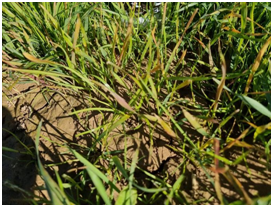
In commercial wheat operations, sustained weed pressure can lead to reduced crop competitiveness, uneven stand development, and compromised yield stability. These effects may not always be immediately visible but often manifest over time through declining performance consistency and increased variability at harvest.
From a business standpoint, persistent weed pressure increases uncertainty in cost forecasting, input planning, and long-term field management strategies. Such uncertainty poses a direct risk to operational efficiency and return on investment, particularly in large-scale production systems.
Integrated Management Awareness
Effective weed management at the system level begins with recognition that no single intervention provides durable results. Sustainable approaches emphasize integration across agronomic planning, monitoring frameworks, and selective use of available tools.
Management awareness focuses on aligning weed management decisions with broader production objectives, including resistance stewardship, crop rotation planning, and preservation of future control options. Rather than reacting to individual infestations, successful programs are designed to reduce cumulative pressure and maintain system resilience over multiple seasons.
By adopting a risk-oriented perspective, management teams can better evaluate trade-offs between short-term suppression and long-term sustainability, supporting more predictable production outcomes.
Chemical Control Considerations
Chemical solutions may serve as one component within an integrated weed management framework when aligned with resistance management principles and local regulatory requirements. Their role is best evaluated in terms of contribution to overall system balance rather than as stand-alone solutions.
Selective herbicide formulations such as KING’S CHARM may be considered as optional tools within structured programs, subject to local registration status and approved use conditions. Strategic positioning of chemical inputs supports diversification of control approaches and preservation of long-term effectiveness.
King Quenson Support Statement
King Quenson is well positioned to support importers and professional agricultural operations in evaluating wheat weed management strategies and integrating compliant, system-oriented solutions based on local production conditions and regulatory frameworks.
Disclaimer
This article is based on publicly available agricultural extension materials and general integrated weed management practices. Management considerations should be adapted to local conditions, cropping systems, and regulatory requirements.