Overview
Potato is a key crop in global commercial production systems, where yield stability and quality consistency directly influence production profitability. Among the various disease challenges faced by potato operations, late blight remains one of the most destructive and unpredictable threats. Under favorable environmental conditions, disease development can be rapid, placing significant pressure on production planning and risk management.
From a management perspective, late blight is not merely a seasonal disease issue, but a system-level risk influenced by weather patterns, production practices, and historical disease pressure. Effective management therefore depends on early risk recognition and coordinated decision-making rather than reactive field-level responses.
Late Blight Characteristics
Late blight, caused by Phytophthora infestans, is characterized by its rapid disease cycle and strong dependence on cool, humid environmental conditions. Infection can spread quickly across foliage and tubers when conditions are favorable, making timely management decisions critical in commercial potato systems.
Typical disease expression includes foliar lesions and tuber infections that may compromise both yield and post-harvest quality. Due to its aggressive nature and capacity for repeated infection cycles, late blight is widely regarded as one of the most challenging diseases to manage in potato production.
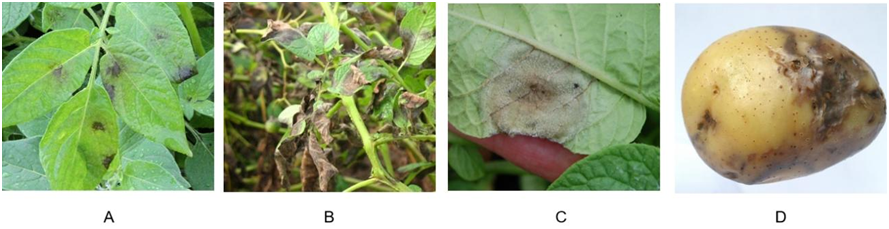
Recognizing Late Blight in the Field
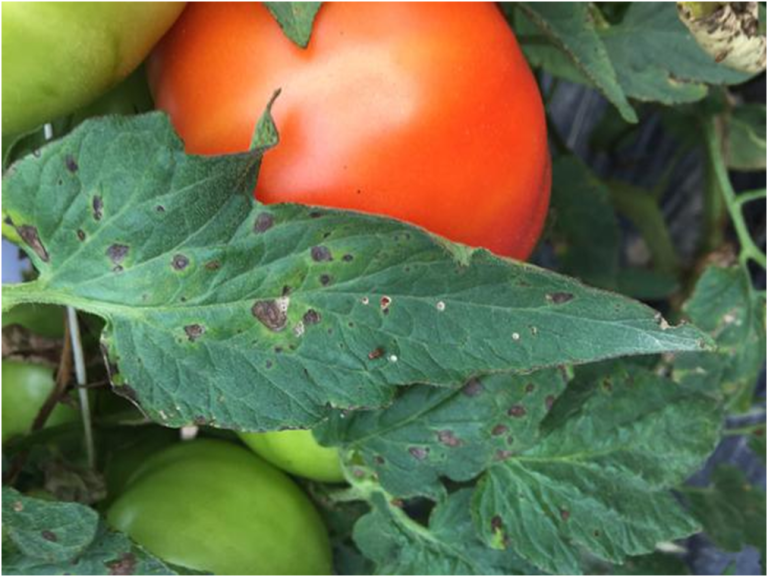
- Early Foliar Symptoms (Fig. A)
- Small, light-to-dark green, water-soaked spots appear, often starting on lower leaves.
- Lesions typically form near leaf tips or edges where moisture lingers.
- Progressive Leaf Damage (Fig. B)
- Under cool, humid conditions, lesions rapidly expand into large, dark brown or black patches with a greasy appearance.
- The infection spreads quickly, unrestricted by leaf veins, and entire leaves may blight within days.
- Sporulation Signs (Fig. C)
- In humid weather, white, fuzzy mold (sporangia and sporangiophores) develops along lesion margins or petioles, signaling active sporulation.
- Tuber Infection (Fig. D)
- Tuber symptoms include irregular, slightly sunken patches with brown to purplish skin discoloration.
Impact on Commercial Potato Production
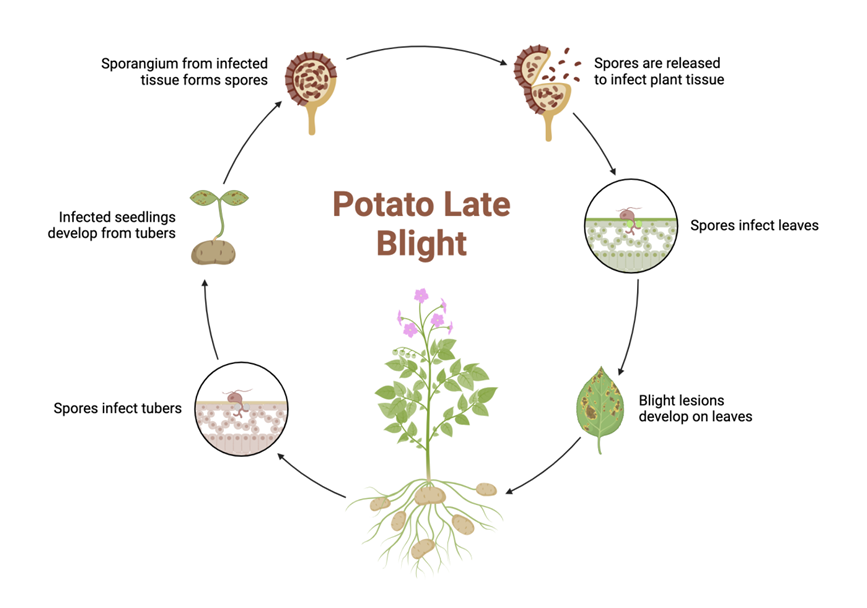
Unmanaged late blight pressure can have significant consequences for commercial potato operations, including:
- Reduced marketable yield and quality consistency
- Increased variability in harvest outcomes
- Elevated management costs due to corrective interventions
- Heightened long-term disease risk within production systems
For large-scale and export-oriented operations, these impacts translate into reduced predictability and increased operational risk.
Integrated Management Considerations
Effective late blight management is most sustainable when implemented within an integrated disease management framework. Rather than relying on single measures, integrated approaches emphasize coordinated strategies that address disease pressure at the system level.
Key considerations within an integrated management approach may include environmental risk assessment, field-level monitoring, and alignment of cultural, biological, and chemical tools. Preventive strategies aimed at limiting disease establishment and spread play an important role in reducing overall disease pressure across production cycles.
Chemical Control Considerations
Chemical disease control tools may be considered as part of an integrated late blight management program when aligned with overall production objectives. Their role is typically evaluated based on disease pressure, resistance management considerations, and compatibility with other management practices, rather than as stand-alone solutions.
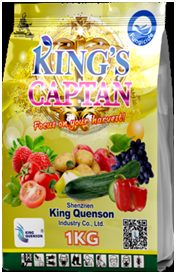

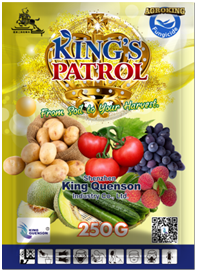
Products such as King’s Captan, King’s Patrol, and King’s Soldier may be integrated into broader late blight management strategies where appropriate. Chemical tools are positioned to complement system-level disease management efforts and support more consistent production outcomes.
King Quenson Support Statement
King Quenson is well positioned to support importers and professional agricultural operations in evaluating late blight management strategies and integrating compliant, system-oriented solutions based on local production conditions and regulatory requirements.
Disclaimer
This article is based on publicly available agricultural extension materials and general integrated plant protection practices. Management considerations should be adapted to local conditions and regulatory requirements.