
Brazil’s second corn crop has suffered an estimated loss of at least 700,000 tonnes due to fall armyworm (Spodoptera frugiperda), according to agri-consultancy Agroconsult. The figure underscores a marked escalation in pest losses throughout key producing regions during the recently harvested safrinha season.
Although the direct production losses represent less than 1% of the total second-crop output—reported at 115.7 million tonnes—the consultancy warns that the broader economic impact is significantly higher when accounting for input costs and crop protection investments that failed to fully mitigate damage.
″This calculation only considers what producers failed to harvest in terms of yield loss at the ear level,″ said André Debastiani, partner-director at Agroconsult, during a presentation of results from the corn phase of the Rally da Safra survey. ″When you include the investment side, the losses are substantially larger.″
Rising pest incidence across key producing states
Agroconsult data indicates a clear upward trend in fall armyworm infestation rates throughout Brazil’s core grain-producing states, particularly Mato Grosso and Goiás.
In western Mato Grosso, infestation levels rose from 44% of surveyed fields in the 2024/25 season to 56% in 2025/26. In the state’s southeastern region, incidences increased more sharply, from 35% to 59% during the same period.
Goiás recorded the most significant surge, with infestation expanding from 35% to 74% of assessed areas. Agroconsult attributes the increase to a combination of climatic conditions, pest persistence, and adjustments required in field management strategies.
Management pressure despite biotech adoption
Despite widespread adoption of genetically engineered corn traits designed to combat insect resistance, Agroconsult notes that producers are increasingly forced to rely upon multiple control strategies, including repeated chemical applications.
″Even with up to four applications targeting fall armyworm, and despite investment in resistant genetics, the problem continues to expand,″ Debastiani said. ″This reinforces the importance of integrated pest management. There is no silver bullet.″
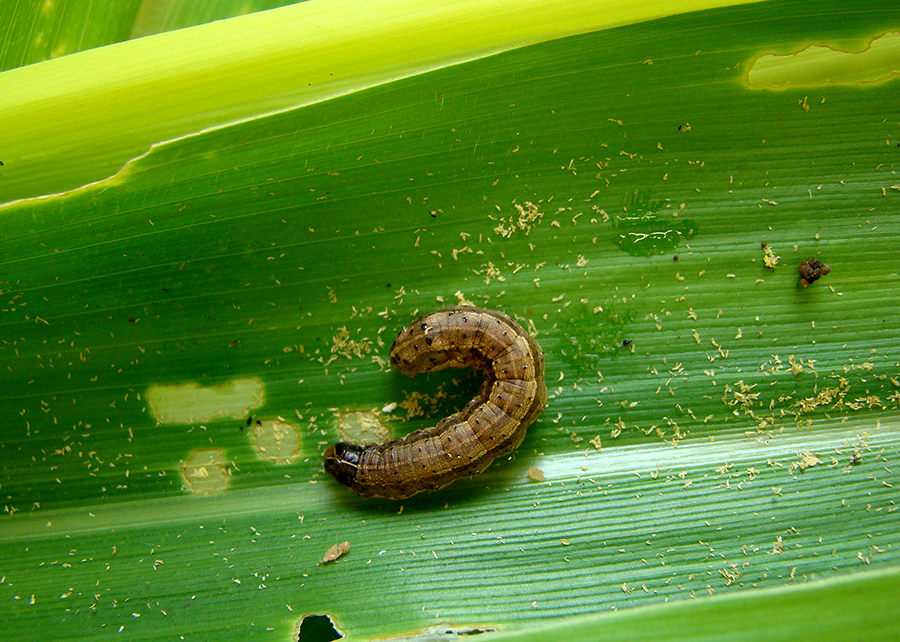
The statement reflects a broader agronomic concern in Brazil’s grain belt: the growing resilience of Spodoptera frugiperda populations and the limitations of single-technology solutions when deployed on their own.
Output holds, but margins tighten
Brazil’s safrinha corn production reached 115.8 million tonnes in 2025/26, a decline of more than 7% compared with the previous year, according to Agroconsult. Despite the contraction, output still exceeded earlier expectations due to stronger-than-anticipated yields in parts of Mato Grosso.
However, Agroconsult noted that producer profitability deteriorated sharply, even in regions with relatively stable yields. Additionally, production costs for the 2025/26 safrinha crop rose approximately 6% year-on-year, driven by input inflation and elevated financing costs.
″In the central-northern region of Mato Grosso, margin compression reached around 20% compared with the previous season,″ Debastiani said, citing persistent pressure from subdued corn prices and elevated interest rates.
Regional divergence in productivity losses
While Mato Grosso showed pockets of resilient yields, other major producing states faced more severe productivity declines. Goiás and Paraná, both critical contributors to Brazil’s corn balance sheet, registered significant drops in field performance.
″In Paraná, the productivity decline is expected to be around 40%,″ said Adriano Loturco, partner and grain consulting manager at Agroconsult. The combination of lower yields in key regions and rising production costs is expected to further erode farm incomes even as national output remains historically high.
The escalation of fall armyworm pressure in Brazil’s second corn crop carries broader implications for the global crop protection and seed technology markets. The data reinforces ongoing concerns over pest adaptation, resistance management, and the limitations of trait-based protection systems, when not integrated with chemical and agronomic practices.